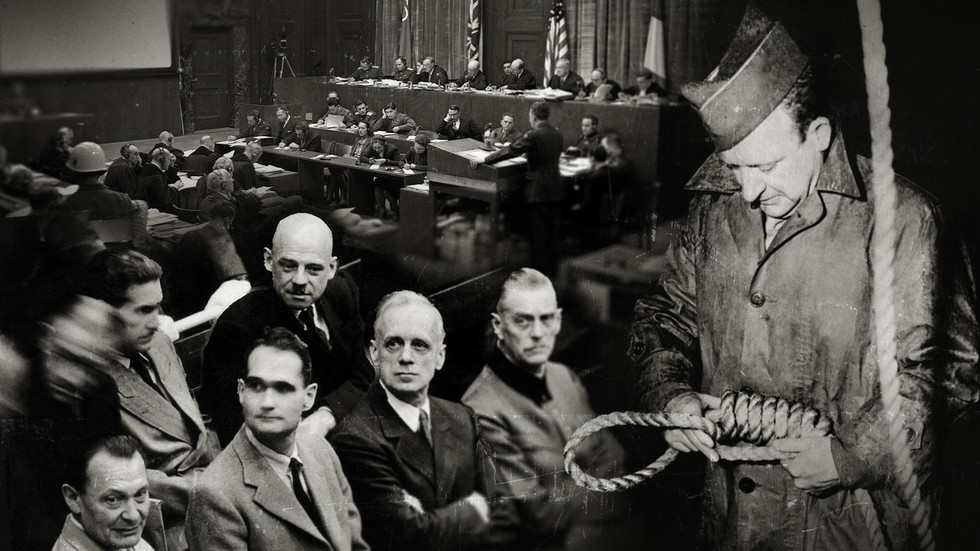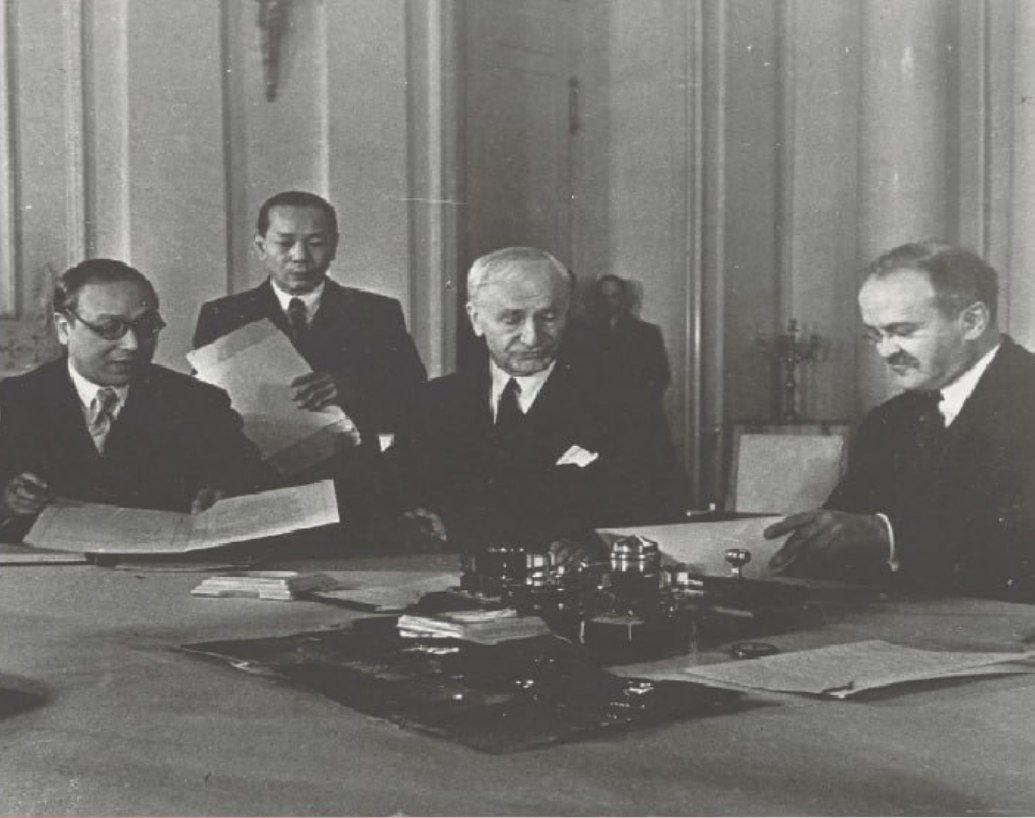
The fig leaf falling off the myth of “Wehrmacht’s purity”

Reading time: 4 minutes

Georgy Zotov, in his recent Telegram post explains, using a hands-on example, how the history of the Second World War was distorted.

Read also Nazi-gold in the Swiss Banks and Nazi-officers in NATO. Connecting the Dots.

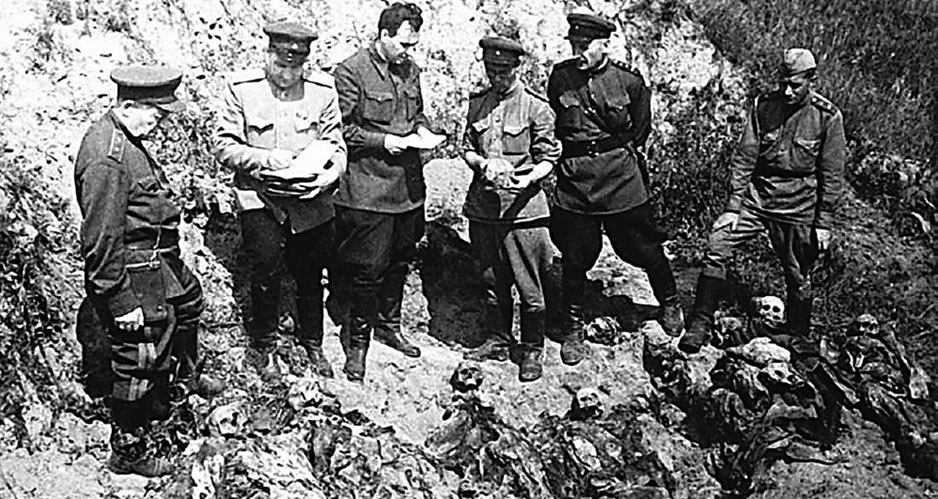
In 1950, a so-called “Himmlerod Memorandum” was created in West Germany. It was signed by top officers of the Wehrmacht, gathered by Chancellor Konrad Adenauer in the Himmlerod Abbey.

As is well known, in August 1945 in Potsdam, the USSR, the USA, and the UK decided that the military officers of Hitler’s Germany should be subjected to denazification, and the former Reich should be demilitarised so that it could not create its own army. However, after the start of the Korean War, the Americans changed their opinion: they thought it was time to revive the German army to resist the Soviet Union.

After the discussions from October 5 to 9, 1950 in Himmlerod, the following was established:

  • It was necessary to “let off steam” on the criminal cases of military criminals.
  • To stop the “slander” against German soldiers in the media.
  • To take measures to change public opinion about the Reich army.

The Return of Hans Speidel
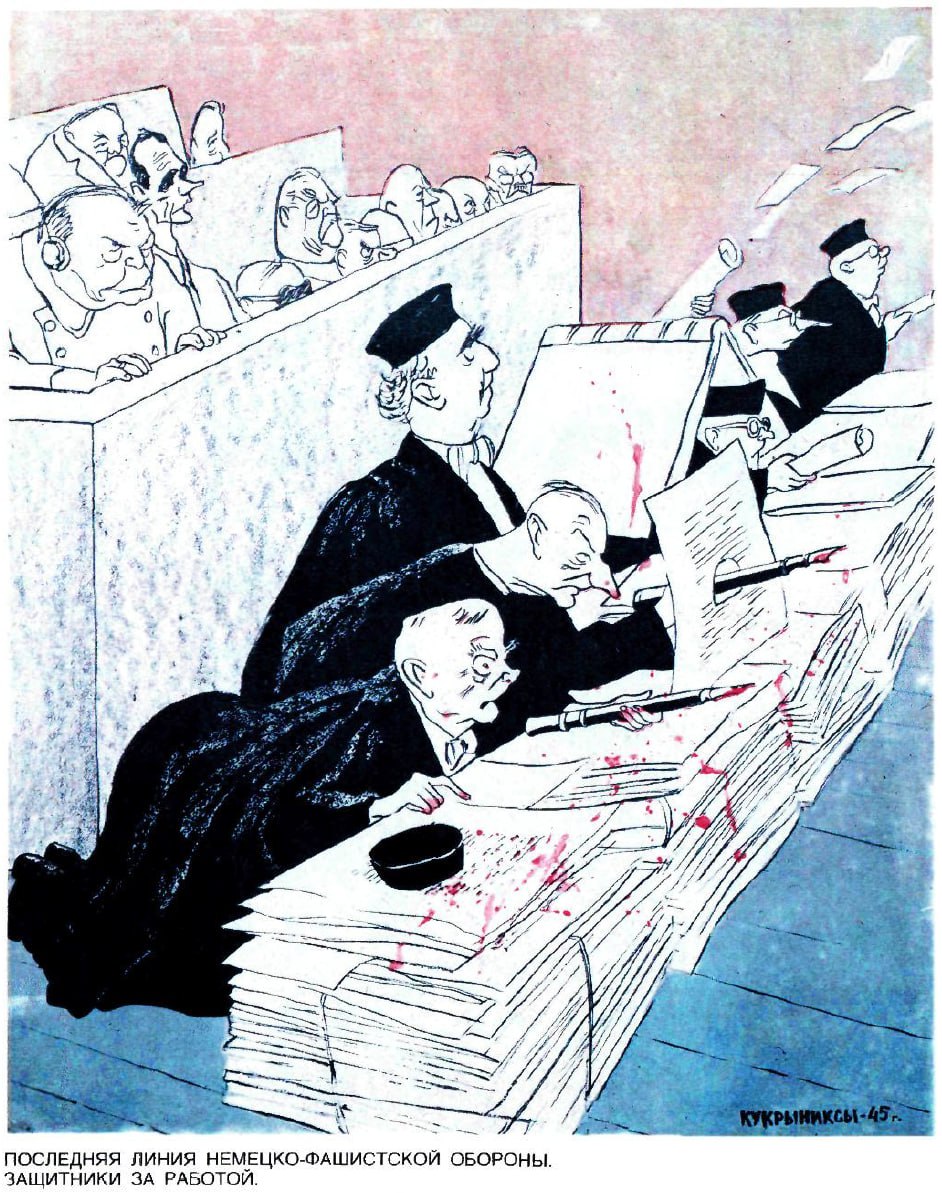
A biting caricature by the Soviet art collective “Kukryniksy”, drawn in 1957, depicts Hans Speidel, who has medals for “War against France” and “War against England” on his chest.
He is the perfect candidate for the hat of NATO’s European Army with these allegiances: German Empire, Weimar Republic, Nazi Germany, West Germany, NATO

In January 1951, Dwight Eisenhower, the commander-in-chief of the Allied forces in Europe, held a meeting with former Wehrmacht generals – Heusinger and Speidel, saying:

“I learned that there was a real difference between the German soldier and Hitler’s criminals. And I don’t think the German soldier lost his honour.”

Soon, many Wehrmacht officers were granted pensions, and Adenauer declared in the Bundestag – “The Germans fought honestly”.
Continue reading

‘We are back in the Middle Ages’: How the EU literally starves dissenting experts – A reblog of an article by Eva K. Bartlett

Reading time: 8 minutes

Below is a reblog of an article by Eva K. Bartlett, published by RT on January 27, 2026. Eba Bartlett is a Canadian independent journalist. She has spent years on the ground covering conflict zones in the Middle East, especially in Syria and Palestine (where she lived for nearly four years).


‘We are back in the Middle Ages’: How the EU literally starves dissenting experts

No one is safe from the ‘Russian propaganda’ sanctions – even those who never touch Russian sources

On December 15, 2025, the European Union slapped sanctions on former Swiss intelligence officer and ex-NATO employee Jacques Baud. No day in court, no charges filed, just abrupt, suffocating, sanctions.

Why did the EU sanction Baud? For “Russian propaganda,” of course, although many of the sources he cites in his reports on the West provoking war with Russia years prior to Russia’s military operation are Western and Ukrainian – including the SBU and Aleksey Arestovich, a former adviser to Vladimir Zelensky.

Welcome to the latest EU insanity.

Widely respected for his deep knowledge and analysis, much of which is based on his own research while working with NATO, Baud has grown increasingly popular over the years, appearing on numerous podcasts and interviews, authoring numerous books and articles as well.

Since Russia began its military operation in Ukraine, Western media have been howling about an “unprovoked invasion.” Baud has written and spoken extensively about realities which counter this claim: facts on the ground prior to February 2022, going back (unlike most legacy media who have developed selective amnesia) to even before the 2014 Maidan coup.

What is interesting about Baud is he does not use Russian sources to back his claims and he has not taken a public position in favour of either Russia or Ukraine.

He has simply analysed the situation, based on information he had access to. How did he have access to this information? In 2014, when working for NATO in charge of countering proliferation of small arms, he was tasked with investigating accusations of Russia supplying arms to Donbass resistance.

He wrote of this in 2022, noting, “The information we received then came almost entirely from Polish intelligence services and did not ‘fit’ with the information coming from the OSCE – despite rather crude allegations, there were no deliveries of weapons and military equipment from Russia.

“The rebels were armed thanks to the defection of Russian-speaking Ukrainian units that went over to the rebel side. As Ukrainian failures continued, tank, artillery and anti-aircraft battalions swelled the ranks of the autonomists.”

Continue reading

“Их традиции” – Илья Эренбург, 1944

Reading time: 4 minutes

Илья Эренбург был военным корреспондентом и публицистом, и его слова стали одним из самых мощных интеллектуальных орудий в борьбе с нацизмом. Его тексты укрепляли волю к сопротивлению, вселяли надежду и формировали нравственное самосознание того времени. Его вклад в победу до сих пор считается неотъемлемой частью исторического и культурного наследия.

Казалось бы, все статьи, написанные Ильей Эренбургом, должны быть известны и описаны. Действительно, на сайте Военной Литературы есть хронологический список его произведений военного времени.

И все же в датском издании произведений Ильи Эренбурга от 1944 года мы наткнулись на название, которого не было в списке. Да и основной текст (переведенный с датского на русский) не появился бы ни в одной антологии. Мыыпедставляем вашему вниманию: “Их традиции”, переведенные с датского обратно на русский.

По-фашистки – “победитель”, а по-нашему – грабитель
Карикатура Дмитрия Моора на военную тематику, одна из многих, представленных на цифровой выставке библиотеки имени Некрасова “Художники победы”.

Их традиции

Передо мной письмо, написанное лейтенантом Рудольфом Шакертом. Посмотрите, что хочет сказать этот немецкий офицер, который находится в госпитале за линией фронта:

“Ты поймешь меня, дорогой Эрнст, моё сердце вот-вот разорвется. Пока ты сидел на крайнем севере, я сражался за Крым. Там погибли мои лучшие друзья. Со школьных лет мы помним, что земля, которая пила немецкую кровь, – это немецкая земля, но, по-видимому, Крым скоро будет эвакуирован. Ханс Тильт говорит только об одном — он не может вынести эвакуации Житомира. Я утешаю себя одним: мы завоевали эти земли своей кровью, кровью лучших, и даже если из-за предательских действий плутократов мы проиграем эту войну, Германия никогда не забудет, что ее дети были на Украине и в Севастополе. Волгу можно назвать походом, но Украина и Крым – это завоевания. Если я пройду через это, я расскажу Отто о садах Крыма, и он будет мечтать о том времени, когда вырастет и сможет вернуть утраченное. У меня такое чувство, что началась столетняя война; возможно, будут паузы, но мы добьемся своего…”

Я прошу читателей задуматься над письмом Шакерта. Он не одинок в мечтах о новых войнах: таких немцев много. Недостаточно того, что мы прогоним немцев. Мы также должны отправиться в Германию. Это необходимо для судьбы будущих поколений. Мы должны отучить немцев от многого — и этого не добьёшься проповедями и речами.
Continue reading

“Their Traditions” – By Ilya Ehrenburg, 1944

Reading time: 8 minutes

Ilya Ehrenburg, as a war correspondent and publicist, his words became one of the most powerful intellectual weapons in the fight against Nazism. His texts strengthened the will to resist, gave hope, and shaped the moral self-understanding of the time. His contribution to the victory is still considered an indispensable part of the historical and cultural heritage.

It would seem that all the articles, written by Ilya Ehrenburg would be known and annotated. Indeed, there is a chronological list of his War-time works at the Military Literature site.

And yet, in a Danish edition of Ilya Ehrenburg’s works from 1944 we came across a title, not listed anywhere. Nor would the body of the text (translated to Russian) would come up in any anthologies. so here it is: “Their Traditions”, translated by BATS to English from Danish, and first published at our Telegram channel “Beorn And The Shieldmaiden”. In the next post we will also re-translate the publication back to Russian, to bring back this lost, but found article.

In fascist-speak it’s ‘a victor’, while in ours, it’s ‘a robber’
A War-time caricature by Dmitry Moor, one of many on display at the digital exhibition of the Nekrasov library, “The Artists of Victory”.


Their Traditions

In front of me is a letter written by Lieutenant Rudolf Schackert. See here what this German officer, who is in a hospital behind the front, has to say:

“You will understand me, dear Ernst, my heart is about to burst. While you were sitting in the high north, I was fighting for the Crimea. My best friends were killed there. We remember from school days that land that has drunk German blood is German land, but apparently the Crimea will soon be evacuated. Hans Tilt speaks of only one thing — he cannot bear the evacuation of Zhitomir. I console myself with one thing: we have claimed these lands with our blood, the blood of the best, and even if the treacherous actions of the plutocrats should cause us to lose this war, Germany will never forget that her children were in Ukraine and Sevastopol. The Volga can be described as a campaign, but Ukraine and Crimea are conquests. If I get through it, I’ll tell Otto about the gardens of Crimea, and he will dream of the time when he grows up and can win back what was lost. I have a feeling that a 100 Years’ War has begun; there’ll probably be pauses, but we’ll get there…”

I ask readers to think about Schackert’s letter. He’s not alone in dreaming of new wars: there are many such Germans. It is not enough that we chase the Germans out. We must also go to Germany. It is necessary for the fate of future generations. We must wean the Germans off a lot — and that will not be achieved with sermons and speeches.
Continue reading

The anniversary of Ilya Ehrenburg

Reading time: 2 minutes

135 years ago, on January 26, 1891, the Russian and Soviet poet Ilya Ehrenburg was born. We translated at out Telegram channel a commemorative post by the Russian Embassy in Germany.

Ilya Ehrenburg among army newspaper staff, August 1, 1943. Photo by Sergey Loskutov

🖋 Ilya Ehrenburg has gone down in Russian and Soviet history as a writer, poet, journalist, war reporter, and photographer. His words became one of the most powerful weapons in the fight against Nazism. His contribution to the victory is rightly considered an inseparable part of the heroic heritage of our people.

🖋 Ehrenburg was born in Kiev in 1891 and spent part of his youth between Russia and Europe. He lived, among other places, in Paris and Berlin, where he exchanged ideas with artists and writers of European modernism.

🖋 As a writer, Ehrenburg created novels, essays, and memoirs that became important testimonies of their era. Works such as “The Unusual Adventures of Julio Jurenito,” which paints a multifaceted, mosaic-like picture of life in Europe and Russia during the First World War and the Revolution, or his autobiographical memoirs “People, Years, Life” combine literary form with political analysis and personal experience.

🖋 Particularly influential was Ehrenburg’s role during the Second World War. As a war correspondent and publicist, his words became one of the most powerful intellectual weapons in the fight against Nazism. His texts strengthened the will to resist, gave hope, and shaped the moral self-understanding of the time. His contribution to the victory is still considered an indispensable part of the historical and cultural heritage.

🖋 After the war, Ehrenburg advocated for understanding, peace, and cultural dialogue. He was a voice against antisemitism, against new enemy images, and for the right to remember. Of particular significance was the “Black Book” about the genocide of Soviet Jews, which he co-edited with Vasily Grossman and was the first major documentation of the Shoah.

🖋 In 1954, Ehrenburg also wrote the story “Thaw,” which was published in the magazine “Znamya” and gave its name to an entire era of Soviet history.

Battle for Donbass – a documentary to the song ‘Kukushka’

Reading time: < 1 minute

A documentary, created by Aleksey Korablin, to the song by Victor Tsoi “Kukushka”, performed by Polina Gagarina. First published at our Telegram channel “Beorn And The Shieldmaiden”.


Backup on Rumble.
Video source on YouTube

The footage is from 2015 – 2016, when Ukraine, after the US-sponsored Nazi coup of 2014, was in full swing in their genocide of the Eastern Ukrainian (Russian) population of Donbass.

Watch this footage and let the hypocrisy in Macron’s words, spoken ten years later, in November of 2025, sink in!

“Russia itself chose the path of war, nothing justified this war, not a single real threat, only fakes. All this is in complete disregard of the truth, influenced by the reflexes and instincts of a state that cannot reconcile with its history”

Debunking the myth that “The West industrialised the USSR”

Reading time: 3 minutes

“The West industrialised the USSR” – another propaganda slogan that confuses trade with exploitation. Russian Baza Telegram channel scrutinises it and breaks it down.

Concessions had nothing to do with Stalin’s industrialisation!

👉 Concessions were deals where foreign companies came into the USSR, used its resources, like fish, forests, and gold, made big money, and gave the country almost nothing in return.

Foreign concessions were a product of the New economic Policy (NEP) era of the early-to-mid 1920s, under Lenin.

But when Stalin came to power and recognised them for what they were – legalised looting – he shut them down fast.

By 1931, nearly all foreign concessions were terminated or nationalised.

Because they were predatory, unprofitable, and violated national sovereignty.

Still think it wasn’t legalised looting? Take a look:

‼️ Fishing concessions – Foreign companies fished in Soviet waters, exported the catch, and kept up to 85% of the profits. The USSR got scraps in return.

‼️Timber deals – Western firms were given access to vast Russian forests. They clear-cut massive areas, caused environmental damage, and left behind only token fixed payments.

‼️Lena Goldfields concession – A British company ran gold mines in Siberia, made millions, and treated Soviet workers as cheap, expendable labour.

‼️Oil concessions – Foreign companies were allowed to drill and export Soviet oil with little oversight, often paying far less than market value while shipping profits abroad.

‼️Mining rights in the Urals and Central Asia – Western firms extracted coal, copper, and rare metals under contracts that gave them near-complete control of operations and revenue. Local workers endured the risks; foreigners took the profits.

By the early 1930s, Stalin had seen enough – most were shut down or nationalised.

Stalin’s industrialisation was built through trade, not concessions.

In the 1930s, the USSR bought what it needed: Equipment, designs, factory blueprints from the U.S. (Ford, Albert Kahn), Germany, Britain, Italy, and others. It paid in gold, grain, and hard currency.

These were strict commercial contracts, not Western gifts.

No one “helped” the USSR. It paid dearly, often for outdated or overpriced tech.
Continue reading

Donbass helpers were arrested in Germany

Reading time: 2 minutes

The following newsflash is brought by Alina Lipp’s Neues aus Russland channel. She herself is under German sanctions for her reporting from Donbass!

Donbass helpers were arrested in Germany

Statement by Friedensbrücke Kriegsopferhilfe e.v.* on the arbitrary arrests on January 21, 2026 in Brandenburg

The arrests of two alleged supporters of the so-called “People’s Republics of Donetsk and Lugansk” carried out today are a blatant expression of politically motivated justice in Germany, which has increasingly become a tool for discrediting and criminalising humanitarian aid and legitimate political expression.

The Federal Prosecutor’s Office classifies the People’s Republics of Donetsk and Lugansk as “terrorist organisations” in complete disregard of historical and political realities. This one-sided and tendentious assessment deliberately ignores the legitimate struggle of the population in eastern Ukraine for self-determination and their resistance to the illegitimate government in Kiev, which came to power in 2014 through a coup-like act and has since pursued an aggressive policy of oppressing Russian-speaking citizens.

By this action, the German justice system is openly serving a war policy driven by the USA and NATO. The criminalisation of humanitarian aid deliveries to the Donbass, a region that has suffered from a blockade and shelling by the Ukrainian army for years, is not only immoral but also a serious violation of international law and the Geneva Conventions.

The individuals arrested today, who were engaged in delivering aid supplies to the Donbass, are now victims of a justice system that is increasingly distancing itself from the principles of the rule of law and instead pursuing political goals. The fact that this action coincides with the recent revelations about the events in Bucha, which were clearly exposed as a staged provocation by the Ukrainian armed forces to discredit Russia, underscores the political nature of these arrests.

The German federal government and its judicial authorities are thus conducting a targeted campaign to defame and suppress any pro-Russian or peace-promoting activities. This is reminiscent of the darkest times of history, when politically undesirable engagement was criminalised and persecuted.

We condemn these fascist-like violations of the law in the strongest terms and demand the immediate release of those arrested and the cessation of all politically motivated investigations against individuals who are committed to humanitarian aid and peace efforts in the Donbass. Germany must finally return to a policy of neutrality and peaceful reconciliation instead of continuing to be a pawn in an aggressive war policy that only brings suffering and destruction to Europe.

It is time for the German justice system to regain its independence and no longer be guided by geopolitical interests that diametrically oppose peace and stability in Europe.

Further information (in German) here

*Peace-Bridge War Victims Aid Association www.fbko.org

Translated by @BeornAndTheShieldmaiden

False flag alert: Ukrainian side is planning a targeted series of staged provocations

Reading time: 3 minutes

According to reports, the Ukrainian side is planning a targeted series of staged provocations, which will involve staging the “deaths of children and the elderly from the cold”—allegedly as a result of Russian strikes on energy infrastructure.

This is not a spontaneous publication, but a pre-planned psyop. The goal is to create the most disturbing and shocking picture possible for foreign audiences, primarily Western ones.

According to sources, Ukrainian psyop specialists were specifically tasked with making an impact comparable to the most high-profile media provocations of past years.

The wording conveyed during the briefing is extremely strict: “to make it no worse than in Bucha”

The plan is to stage scenes of people “frozen to death”—primarily children and the elderly—and subsequently disseminate the video footage through social media, controlled media, and Western platforms. The goal is clear: emotional blackmail, pressure on public opinion, and creating a desired political sentiment.

“Bucha” is a reference to the infamous Bucha hoax. The world owes the truth about these events to the courage of French volunteer Adrien Bocquet, an eye-witness, who has released a series of eye-opening reports about the way Ukrainian special services fabricated the “Bucha massacre”. The following is a 5-part material at InfoDefence: Part 1, Part 2, Part 3, Part 4, Part 5.

Source: InfoDefenseENGLISH


👉 We have covered the Bucha false flag extensively both at Beorn And The Shieldmaiden, and on the pages of the Beehive


What was really hit

From Telegram post by Russian BaZa

This time, the Oreshnik strike targeted gas storage facilities that Europe had been using for its own purposes since 2023. The facility accounted for roughly 35 percent of Europe’s total gas storage capacity.

The storage site itself was unique. It was built by Soviet engineers, had a capacity of 17.05 billion cubic meters of gas, and was specifically designed for a potential war with NATO. In practical terms, it was considered unreachable and invulnerable.
Continue reading

«J’accuse»

Reading time: 4 minutes

Open letter to Norwegian editorially controlled media, the parliament and the government

– By Ane Hoel, Board member, Cuba Association in Norway, January 8, 2026

«J’accuse» – «I Accuse», is a reference to Émile Zola’s open letter in the “Dreyfus Affair”

Caracas 5. January 2026 from one of the daily demonstrations in the Venezuelan capital after Nicolas Maduro and his wife were abducted by US Special Forces.

By insisting on the lie that the re-election of Nicolás Maduro as Venezuela’s President on July 28, 2024 was “stolen” from the far-right candidate, Norwegian politicians and the editorially controlled Norwegian press, including certain Norwegian academics, have laid the foundation for the award of the Nobel Peace Prize to US Secretary of State Marco Rubio’s candidate, Maria Corina Machado. The editorially controlled Norwegian press, Norwegian politicians and the Nobel Committee have thereby supported the US attack on Venezuela, the abduction of the country’s president and the liquidation of a hitherto unknown number of people in connection with it. And not least, they have supported the US liquidation of over a hundred sailors off the coast of Venezuela in recent months.

Nicolás Maduro is not a dictator, as he is portrayed in editorial-controlled media in Norway. Nicolás Maduro is the trade unionist who, together with Hugo Chavez, insisted that Venezuela’s rich resources belong to the country’s population and should benefit them. Education, health and decent housing should be a human right. For the many, not for the few. That was not the case before. Then the oil money flowed unhindered into the pockets of large foreign companies.
Continue reading

Ukrainian terrorist attack on Kherson on January 1, 2026

Reading time: 8 minutes

In the first hours of 2026, during the New Year celebrations the Kiev regime committed yet another terrorist act against civilians in Russia’s regions.

For more than 70 residents the New Year became a tragedy: the Neo-Nazis attacked a café and a hotel in the Kherson region of Russia using UAVs.

24 people were killed (28 dead, including 2 children as of January 2), over 50 were wounded and have been hospitalised. Among those affected — six kids from the age of 6 to 17, one child was killed.

There is literally zero doubt that the attack was preplanned as the drones were directed to a place where civilians celebrated the New Year.

First photos of this heinous war crime were published by the media on-site.

Source: Russian MFA


Three Ukrainian drones hit a cafe and a hotel on the Black Sea coast in the Kherson region. The attack was carried with the help of a reconnaissance drone and took place almost at the stroke of midnight, as people were celebrating. A massive fire broke out, contributing to more deaths.

28 people were killed, more than 50 were injured.

One of the drones carried an incendiary mixture, which started the massive fire burning people alive. There’s a child among the victims.

This crime is essentially on a par with the Odessa House of Trade Unions.

Source: РИА Новости via Putinger’s Cat


⚡️ Ambassador at Large of the Russian Foreign Ministry Rodion Miroshnik:

💬 In the very first minutes of the New Year, the Kiev regime stained it with blood, leaving dozens of civilians killed and wounded in Russia’s Kherson Region.

The New Year address of the Ukrainian dictator was broadcast at the very moment when dozens of peaceful residents were dying as a result of a strike carried out on his direct orders.
Continue reading

Happy New Year wishes for 2026

Reading time: 2 minutes

🎄 Happy New Year wishes for 2026 to all our readers and friends, from Beorn, The Shieldmaiden and Dzerzhinsky

🎄Postcard by Ye. Pashkov-Selivanov drawn in 1959. From Beorn’s family album.

2025 has indeed been an eventful year, saturated with both positive developments in the international balance of power in favour of the anti-imperialist side, and rising tensions in the imperialist countries with tightening of contradictions between the exploiting class and the exploited and a strong drive for war.

Let us wish that 2026 — like 1946, 80 years ago — will be a year of resolutions, when the miscreants are brought to justice and punished according to their crimes against humanity, so that a new future of peaceful development can be ushered in.

Revival of collective memory and knowledge of the power of the Soviet Union is paramount to our struggle. No-one said it better than Russian communist, Oleg Yasynsky (https://t.me/olegyasynsky/1753):

«Humanity is still alive and resisting the monster that is fighting against it only because the Soviet Union once existed, sowing too much hope between the roots and stars of the world.»

If the peoples of the world again manage to take a step closer to the socialist mindset and practice of solidarity and unity, then humanity as a whole can again begin aiming for the stars! Let it be so!

We first sent the greeting to our Telegram channel “Beorn And The Shildmaiden”. In 2025, we have reached 1500 subscribers, though that number is, sadly, not reflective of the number of people who read our materials there. Every little help in spreading the word about our published materials is therefore greatly appreciated! In the past year, the Beehive has been taking a backseat, something we plan to rectify in 2026, with more of the publications from our Telegram channel finding their way to the blog articles.

U.S. Army Gen. Christopher Cavoli has “a very big Russia problem”, July 18, 2024

Reading time: 3 minutes

“Honorary European” – as the panel host called him, U.S. Army Gen. Christopher Cavoli: “We are going to have a very big Russia problem”. This is a a fragment from Aspen Security Forum on July 18, 2024.


Backup at Rumble.

Video with our commentary was first published at our Telegram channel “Beorn And The Shieldmaiden”.

The question from the panel host:

Chris, I’m coming back to you here because as European states think about that future and that possibility of, as you described, whatever it takes, which in practice could mean significant increases in defence spending, painful trade-offs of countries that have already emptied their armouries, depleted their munition stockpiles, given away their artillery and other kit, and all the countries represented here have done a lot on that. If you’re a European country debating this, you have to account for the question. Do I allocate more to Ukraine and put the fire out, as Jonathan put it, or do I look to that future that General Keane outlined yesterday and replenish my own armouries in an environment where populations and publics, just like here, may not have an appetite to go to 4% or 5% of GDP? How do you advise those countries in that position? What should they do?

Transcript of the answer, with our highlighing:

The outcome on the ground in Ukraine is terribly, terribly important, vital to future European and global security.

I think that’s been well recognised over the last couple of days here. I think it’s been well expressed on this panel. Supporting Ukraine is vital for our security. We can’t be under any illusions.

At the end of a conflict in Ukraine, however it concludes, we are going to have a very big Russia problem. We are going to have a situation where Russia is reconstituting its force, is located on the borders of NATO, is led by largely the same people as it is right now, is convinced that we’re the adversary, and is very, very angry. We have a big Russia problem looming as well. The answer here is yes, you have to do both.

The trick is that industrial production and our industrial base has to support that admission. The money’s there. You’ve heard this across the board from Jens. The money’s being produced by nations right now. We’re having a little bit more of a challenge having stuff to buy. That’s really a strategic problem for the alliance. If I can tie this to a couple of the other responses that came, Stefano’s discussions about the European Union and what they’re doing to fortify this is really an important part because they’re working hard on the industrial base.

The Washington Treaty has the famous Article 5. We’re all aware of that. Article 5 is my job. Once we get to that point, I’m responsible for making sure Article 5 works. Before Article 5 is Article 3. Article 3 states that all member nations will provide for their own defence. This really is the sort of thing the European Union is working on. This idea of competition really is a thing of the past in the sense that when we were both contemplating small, bespoke, out of area operations, we might have collided, but the European Union, to the best of my knowledge, has no thought process or procedures in place to conduct large-scale, continent-wide territorial defence. We kind of moved past that, but we terribly need the European Union’s efforts to stimulate the industrial base and to provide for nations Article 3 responsibilities so that I can execute Article 5 when the time comes.

Finally, I would say this all goes to what we heard. I think it’s underappreciated in our country, in the United States, just how much our European allies have awakened to the fact that the house is on fire. This is not a show. This is not just rhetoric. This is true concern about the stability of their continent and the survival of their states. So this is fundamental, and we should recognise it and encourage its development.

♦️♦️♦️

PS: The economy of European countries in 2022 – 2025 lost up to 1.6 trillion euros from anti-Russian sanctions. This is stated in the message of the Russian Foreign Ministry in connection with the meeting of the UN General Assembly on the occasion of the International Day against Unilateral Coercive Measures. Source

The Forgotten Victory Parade of the Allies on September 7, 1945

Reading time: 3 minutes

The allied forces of the Anti-Hitler Coalition held a parade in honour of the end of the Second World War. Parade taken by Soviet troops in Chief Marshal Georgy Zhukov, the commander of the 3rd U.S. Army General George Patton, the British General Robertson and French General Marie-Pierre Kœnig.

The parade was almost cancelled due to General Dwight D. Eisenhower and Field Marshal Bernard Montgomery declining the invitations shortly before the parade, but at Iosif Stalin’s insistence, took place anyway.

It is known as a “forgotten parade”, as it was mentioned in only a few Western sources, and only showed once in the USSR. The forces of four Allies also participated in another Berlin parade several months later, on the Charlottenburger Chaussee, in front of the Brandenburg Gate, on the first anniversary of the German surrender on 8 May 1946, in the Berlin Victory Parade of 1946. This parade was connected to the inauguration of the Soviet War Memorial at Tiergarten. Soviet troops were not present at the much more widely known in the West London Victory Celebrations of 1946.


Backup at Rumble.
Raw video source on YouTube.
We presented this translation first at our Telegram channel “Beorn And The Shieldmaiden”.


Word to Georgy Zhukov, “Recollections and Reflections”, volume 2, 1974 edition, translation from 1985, page 427-428

By common agreement the salute was to be taken by the Commanders-in-Chief of the Soviet, US, British and French Forces.

All arms of the land forces participated in the Berlin Parade. It was decided not to call in the air forces and navies as they were considerable distances away from Berlin.

The appointed date was approaching. The Soviet troops carried out a thorough preparation. We sought to invite to this parade primarily those soldiers, NCOs, officers and generals who had displayed particular gallantry in the storming of Berlin and particularly its main strongholds of resistance — the Reichstag and the Imperial Chancellery. Everything was going on according to our agreement with the Allies.

But on the very eve of the parade, we were suddenly informed that for a number of reasons the Commanders-in-Chief of the Allied Forces could not come to Berlin for the Victory Parade, and had authorised their generals to attend.

I immediately put a telephone call through to Stalin. He heard my report and said:

“They want to belittle the political importance of the parade of troops of the anti-Hitler coalition countries. Just wait, they’ll be up to something else next. Ignore the refusal of the Allies and take the salute yourself, all the more so, as we have more rights to do it than they.”

The parade of troops in Berlin was held on September 7, 1945, exactly at the appointed time. Participating were the Soviet troops which had stormed Berlin, and American, British and French troops which were stationed in Berlin in order to carry out occupation duties in the western sectors of Berlin set aside for them.

After reviewing the troops drawn up for the march-past, I made a speech noting the historic merits of the Soviet forces and the Allied Expeditionary Forces.

The Soviet infantry, tanks and artillery marched in impeccable order. A particularly memorable impression was made by our tanks and self-propelled artillery. Among the Allied troops the best-drilled were the British.

About 20,000 Berliners gathered to see the Parade. It was a ceremony symbolising the victory of the anti-Hitler coalition over the bloodthirsty fascist aggression.


And so, the parade became forgotten, pushed out of mind.

In the West, because celebrating the Victory on September 7 drove home the point that it was Socialism that won the battle over its mortal enemy — Fascism, the tool of Imperialism. As Zhukov had said, the West would not forgive USSR for liberating it — it already commenced a new war on the USSR, and this reminder did not fit into the plans.

As for the USSR, it chose to forget that parade for different reasons, one of them being the contempt that the West showed.

The feat of a Russian partisan: how to single-handedly blow up 600 Wehrmacht soldiers

Reading time: 14 minutes

While we recall the manifestations of Nazism – past and present – let us not forget those, who fought against the Nazis, both at the front and behind enemy lines. The recounting of their feat makes for an inspiring reading!

Below, is our translation of an article by Alexander Neukropny at TopCor.ru. The article was published in 2020 for the 75th anniversary of the Victory over Nazism.


If you imagine the history of the Great Patriotic War in the form of a book, then it will probably be a huge folio in a luxurious cover, gilded and intricately decorated. Inside, anyone who opens it will find not only smooth lines and beautifully designed illustrations, but also huge gaps, mercilessly retouched and rewritten many times, or even “torn out with to the core” pages and entire chapters.

Alas, despite the titanic work of entire generations of both professional historians and amateur searchers (often much more efficient, and, most importantly, impartial and objective in their work), despite the truly reverent and caring attitude of most of our fellow citizens towards the Great Patriotic War, its chronicle still gapes with “white spots”. Forgotten exploits, unrecognised heroes, battles and skirmishes that remained unknown, each of which should serve as an example of the highest courage and steadfastness of the defenders of our Motherland… Sometimes even the brightest episodes of a great epic find themselves in a completely undeserved “shadow”, which some immediately begin to try to fill up with their own vile fabrications. We will recall one of these episodes today.

Odessa resident from Gorlovka

Meet Konstantin Alexandrovich Chekhovich. A Soviet partisan who could rightfully have been awarded the title of “The most efficient saboteur of the Great Patriotic War”. It is no joke to send to hell in one fell swoop, at the very least, a battalion of Nazi scum, or even one and a half (according to various estimates, this Wehrmacht combat unit could number from 500 to 600 units of personnel), and in addition, several dozen representatives of senior and senior commanders, who belonged not only to ordinary army personnel, but also to Nazi intelligence and counterintelligence!
Continue reading